
Sizing
What Size Dumpster Do I Need? An Honest Local Guide
Most guides ask you to estimate cubic yards. We ask three questions, and one of them is whether there is caliche in it.
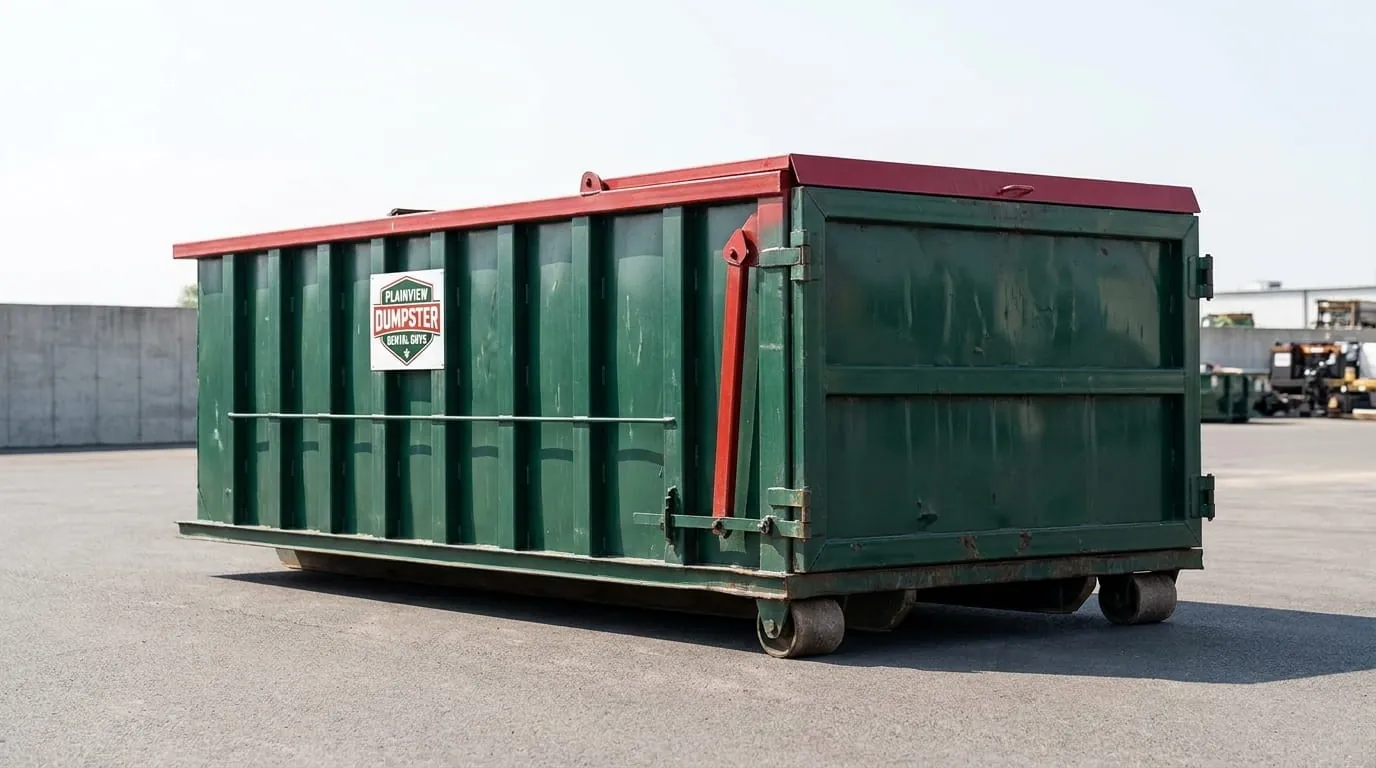
Start with the material, not the number
Almost nobody can estimate their own debris in cubic yards, and guides that ask you to are not much help. We ask three things instead: what are you throwing out, roughly how much in terms you can picture, and where will the container sit.
Ninety seconds on the phone beats any online calculator, because out here the answer often turns on something a calculator never asks — whether the drive is caliche or concrete, and whether there is soil in the load.
Volume and weight, and which binds first
Every container has two limits and you will hit one first. Volume is obvious — you cannot load above the top rail. Weight is the one people forget and the one that costs money.
Each size includes a tonnage allowance: roughly one to two tons on a 10 yard, four to five on a 30. Past that you pay a per-ton overage, which we quote before you book.
What each size really holds
10 yard — 12 ft × 8 ft × 3.5 ft
Three to four pickup loads, one to two tons. The small-job container and the heavy material container: concrete, caliche, brick, block, tile, mortar, soil and rock. Low sides mean you can throw material over the wall without a ramp.
15 yard — 16 ft × 8 ft × 4 ft
Five to six pickup loads, two to three tons. The under-used size, and the right answer more often than people think — older town lots where the drives are short, and any job dense enough that a 20 would hit its weight limit half full.
20 yard — 22 ft × 8 ft × 4.5 ft
Seven to eight pickup loads, three to four tons. Our most common container and the default for re-roofs, remodels and fence lines. Most lots out here take one comfortably.
30 yard — 22 ft × 8 ft × 6 ft
Ten to twelve pickup loads, four to five tons. Same footprint as the 20 with eighteen more inches of height, so it holds half again as much without needing more ground. The right call for a whole-house clear-out, a machine shed, or a farmstead.
Worked examples from local jobs
| Job | Size | Why |
|---|---|---|
| Bathroom remodel | 10 yard | Small volume; tile and cast iron are dense |
| Driveway or slab removal | 10 yard | Concrete runs ~2 tons per cubic yard |
| Anything with caliche or soil | 10 yard, part filled | About as heavy as material gets |
| Older town house remodel | 15 yard | Dense material; weight binds early |
| Kitchen remodel | 15–20 yard | Cabinetry eats volume; tile drives weight |
| Single-layer re-roof | 20 yard | Hits the weight allowance before it fills |
| Two-layer tear-off | 20 yard + swap | Twice the weight, not twice the volume |
| Fence line destroyed | 20 yard | Posts, panels, wire and footings mixed |
| Carport or metal building down | 30 yard | Bulky and light — flatten first |
| Garage or shop clear-out | 20–30 yard | Bulky and light; basements are rare here |
| Machine shed cleared | 30 yard | Mixed and bulky; pull the metal first |
| Whole farmstead | 30 yard + swaps | Phased over weeks, not days |
| Three-bed whole-house clear-out | 30 yard | Contents fill volume before weight |
| Mature tree down | 20–30 yard | Cut it down first; green wood is heavy |
| Commercial fit-out | 30 yard + swap | Phased around trading hours |
Access: town lots, county roads, caliche
Three different working environments in one service area.
- Older town lots — in Plainview's older streets and the town centers of Hale Center, Petersburg, Lockney and Ralls. Shorter drives, narrower frontages. A 15 yard often places where a 20 will not.
- Newer building and open lots — generous access almost everywhere, so the material decides the size rather than the driveway.
- ⚠️ Caliche and gravel drives — very common out here and less forgiving of point loading than they look, particularly after rain. Boards go down as standard on every delivery, and we would rather know the surface in advance.
- Farm and county road access — usually generous, but tell us about soft ground, cattle guards and gate widths.
What this country mostly does not have is grade. Outside the caprock breaks near Silverton and Crosbyton, the ground is flat enough that slope is almost never the constraint — which is worth saying, because in a lot of markets it is the first thing we would ask about.
Soil, rock and caliche
- Caliche, soil and rock go in a 10 yard, part filled. They reach the weight allowance while the container still looks half empty.
- Keep masonry clean and separate. Concrete, brick, block and stone have their own cheaper route — but only if the load is not contaminated with timber and household material.
- Treated timber and landscape ties are not yard waste. They are heavy and they belong in a container.
- Green wood is heavier than seasoned wood. After a storm that matters a lot.
- Do not judge by eye. The most common overage we see is somebody looking at a half-full container of soil and adding more.
The seasons that change the answer
- Spring: hail and wind. After an event every container in the county is spoken for within hours — call before your pile is finished.
- Spring also means blowing dust, which settles into an open container and adds weight you did not load. Cap and cover light loads.
- Autumn and winter: harvest and gin traffic on the county roads affects timing rather than access, but we would rather plan around it than sit in it.
- Winter: cold and wind rather than deep snow, but a wet load that freezes is weight you pay for. Boards under the rails also stop a container bonding to a drive.
- Any time: wind. It is not seasonal here, and it shapes how you load year round.
How to describe your job on the phone
- What the material is. "Kitchen cabinets, countertop, appliances and 200 square feet of tile" tells us everything.
- Whether there is caliche, soil, rock or concrete. Those get their own small container.
- For a roof: squares and layers. Both numbers, not one.
- Roughly when it was built. Pre-1980 means testing before demolition.
- Which town, and whether you are inside the Plainview city limits — it changes which free routes are open to you.
- The drive surface, width, length and any overhead wires.
- If it is a farmstead, tell us about tires, chemicals and scrap before we quote.
Need a container in Plainview?
Call and describe the job. Three minutes on the phone gets you a size recommendation, a flat rate and a delivery window — and we will tell you if a smaller, cheaper container is the right answer.
Call (806) 429-4181